Our science

The Biomorphs

Image for The Biomorphs.

“The Biomorphs” is a window into the lifelong scientific journey of Professor Juan Manuel Garcia-Ruiz

Driven by the mystery of how lifelike structures can arise from purely mineral processes, Garcia-Ruiz has devoted decades to studying silica-carbonate biomorphs: stunning self-assembled formations that mirror the complexity of biological life without being alive.

This research bridges geology, chemistry and astrobiology, challenging our assumptions about what defines life and how we search for it in the earliest history of Earth and beyond.

In a laboratory at the intersection of chemistry and geology, Professor Juan Manuel Garcia-Ruiz has spent decades unraveling one of nature’s most poetic riddles: how can self-assembled and inorganic structures mimic life?

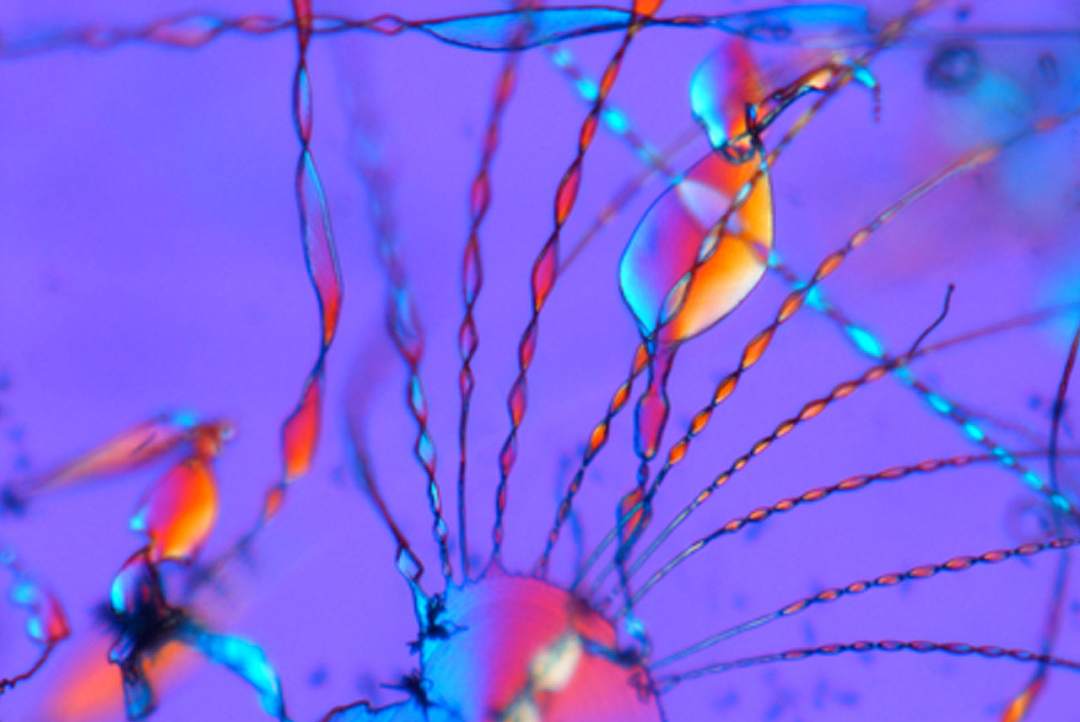
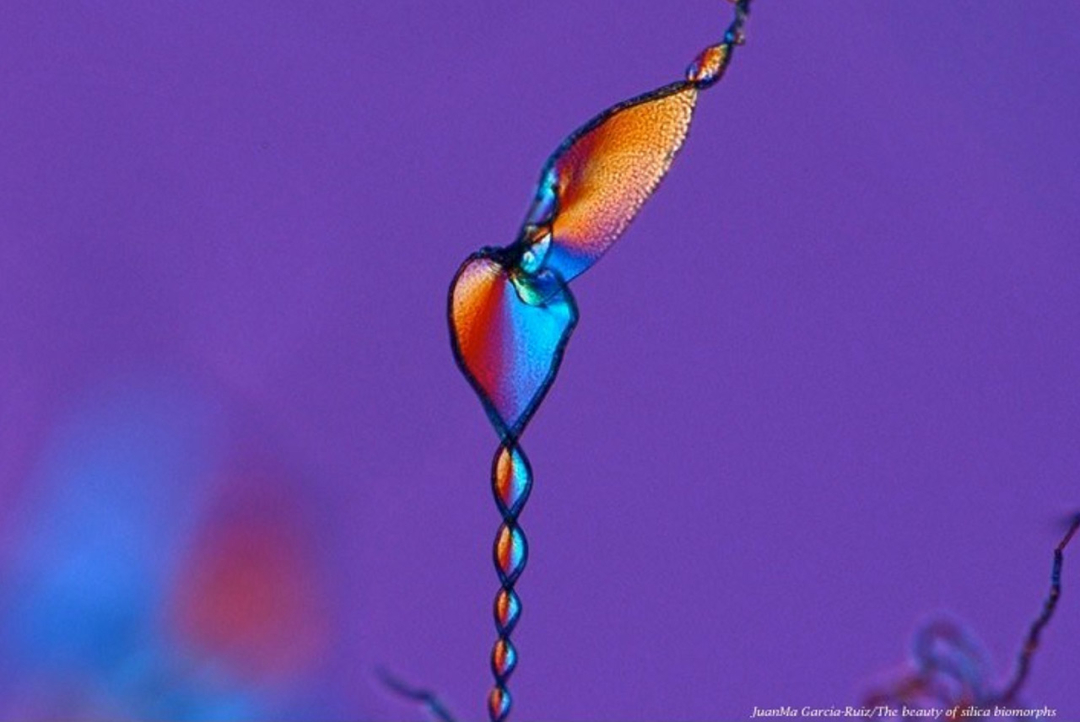
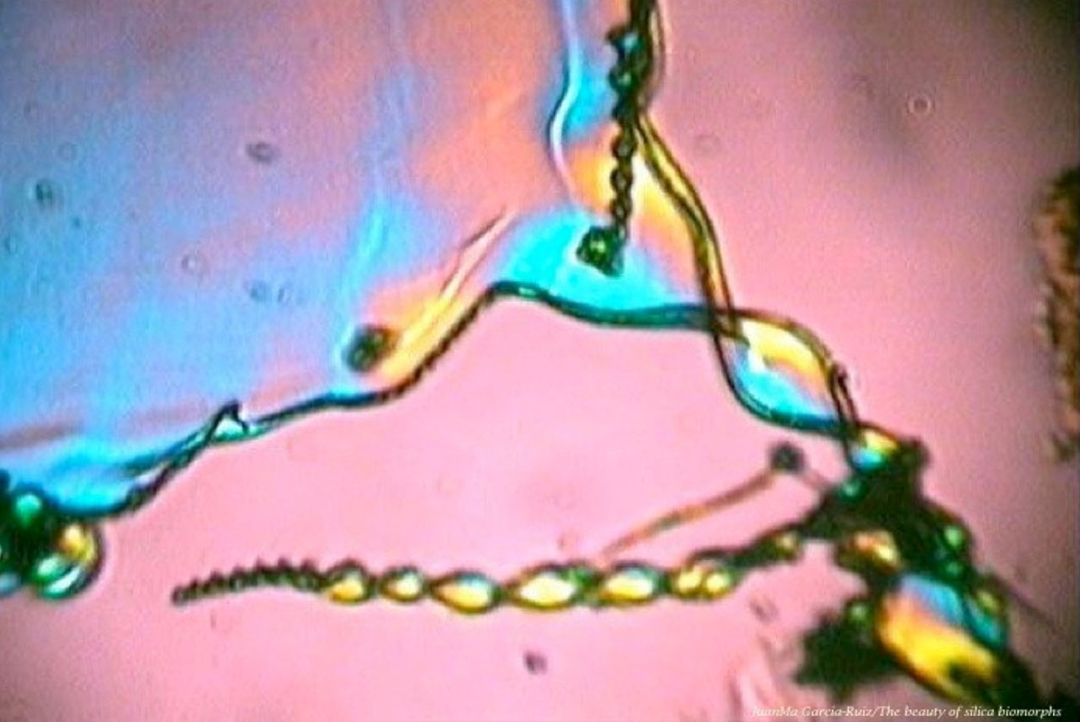
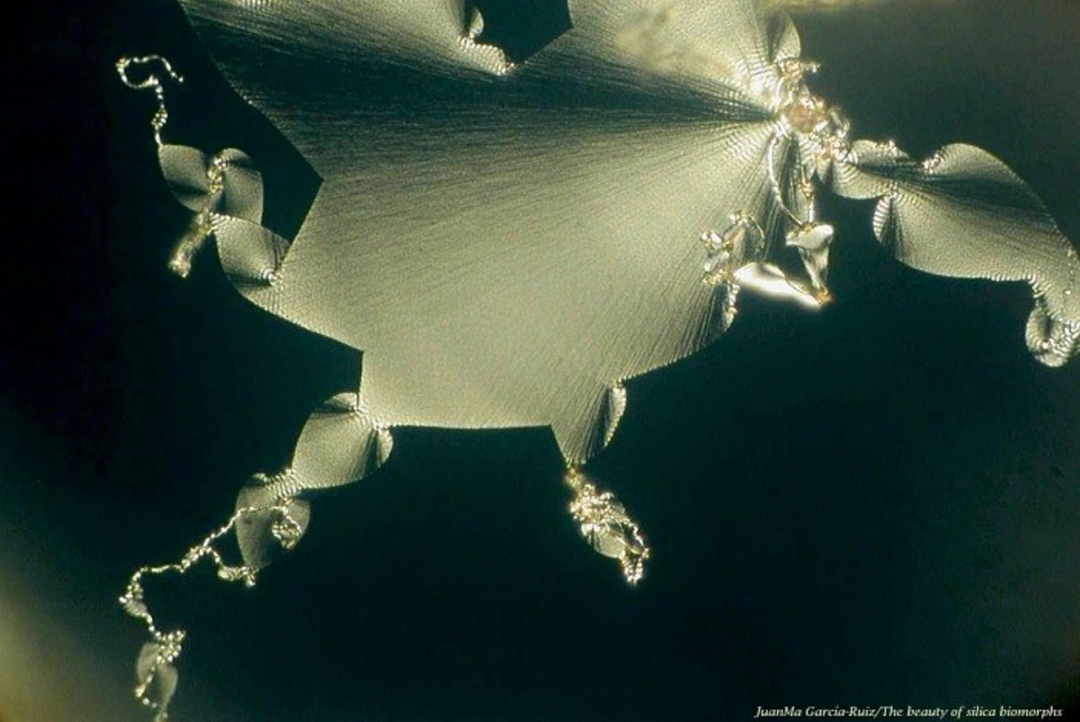
His pioneering work on silica-carbonate biomorphs reveals a world where purely inorganic materials—such as barium carbonate and amorphous silica— self-assemble into intricate structures. These formations resemble organisms, not minerals. Spirals, filaments, cardioid forms, and segmented bodies emerge spontaneously under simple chemical conditions, defying the symmetry rules that usually govern crystal growth.

These biomorphs are not mere curiosities. They challenge the traditional boundary we draw between the living and the non-living. Their elegant, life-mimicking forms raise deep questions about how we identify primitive life on Earth, and possibly on other planets.
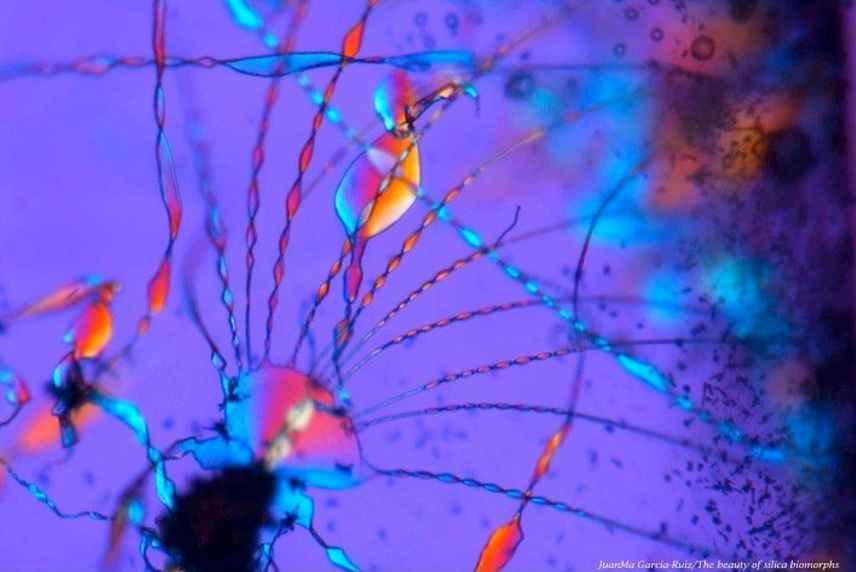
Imagen of Self-assembled nanocrystalline aggregates displayng differentiable morphologies of constant positive or negative Gaussian curvatures.
Self-assembled nanocrystalline aggregates displayng differentiable morphologies of constant positive or negative Gaussian curvatures.

From Chemistry to Morphology: Life Imitated by Matter

Unlike the rigid, faceted geometry of typical crystals, these biomorphs display fluid, organic shapes. Under plausible early-Earth geochemical conditions, Garcia-Ruiz has synthesized structures that, at first glance, could be mistaken for microscopic fossils. And yet, they contain no DNA, no cells, no life, only a self-organized architecture of minerals.

The sheer diversity and fidelity of these forms to biological aesthetics poses a profound scientific and philosophical question: Is morphology alone enough to declare something once lived?

Rethinking Biosignatures

In the search for primitive life (whether in the oldest rocks on Earth or in Martian samples) the standard practice is to look for “biosignatures.” These often include:

  • Morphology that mimics biological cells or organisms.
  • Organic composition, especially carbon-based molecules.
  • Hollow structures, akin to fossilized cell walls.

Garcia-Ruiz’s biomorphs meet all three criteria. They are hollow or become hollow as carbonate dissolves, leaving behind a delicate silicate shell. They can incorporate organic compounds of mineral origin that, upon heating, form kerogen, a complex organic residue indistinguishable from that found in Earth’s oldest microfossils. And their shapes could easily be misclassified as biological.

If such misleading «false positives» can be created in a lab, what does this mean for how we interpret the geological record?

A Window into the Origin of Life

These results carry powerful implications for the detection of life on other planets and the timeline of life’s emergence on Earth.

Much like the fossil record of ammonites or dinosaurs offers clear evidence of past life, the earliest signs of life are less obvious (microscopic and morphologically ambiguous). They often consist of single-celled forms embedded in rocks that are billions of years old. But if non-living processes can produce structures indistinguishable from ancient cells, our criteria for detecting life must be reevaluated.

Even more intriguingly, the biomorphs synthesized by Professor Garcia-Ruiz form in silica gels or sols, just like the barium-rich siliceous rocks where Earth’s earliest microstructures have been found. The overlap is too significant to ignore.

The Deeper Question

Professor Garcia-Ruiz’s work does not merely blur the lines between geology and biology, it reframes them. It suggests that the forms we associate with life may emerge naturally from the physics and chemistry of the Earth itself. Morphology, once seen as a reliable fingerprint of biology, may be an echo of a deeper, universal tendency toward order and complexity.

Thus, the biomorphs are not just minerals. They are silent provocateurs, asking us to look again at what it means to be alive, where life may have first stirred and the role that the mineral world played on this origin.

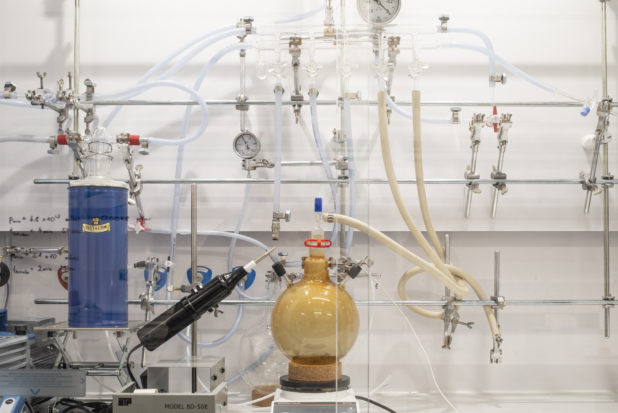
García-Ruiz’ Lab at DIPC
Resumen de privacidad

Esta web utiliza cookies para que podamos ofrecerte la mejor experiencia de usuario posible. La información de las cookies se almacena en tu navegador y realiza funciones tales como reconocerte cuando vuelves a nuestra web o ayudar a nuestro equipo a comprender qué secciones de la web encuentras más interesantes y útiles.