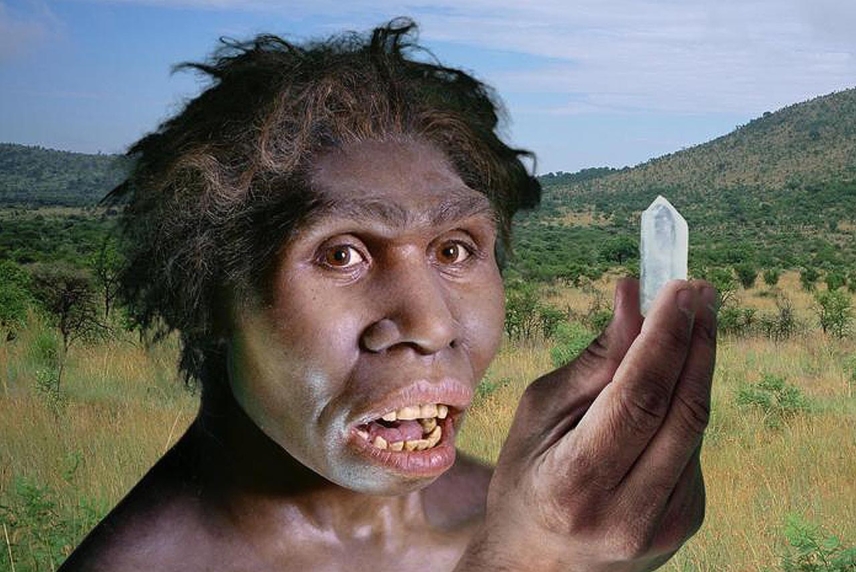
Hominins were familiar with transparency because water, under certain circumstances, is transparent. In fact, the word “crystal”, coined in ancient Greece to name rock crystals and other transparent minerals, means frozen water. This etymology is proof of the relevance of optical properties in the conceptual relations of early humans with minerals. The solidity of the crystals would make their transparency even more charming. Quartz crystals would have been the only solid objects that early humans would have encountered and handled, showing high transparency and light reflection. However, some of the crystals collected by hominids, such as crystals found in the Kalahari Desert in Namibia, collected by hominids 105,000 years ago, are not transparent. There must have been another property that also fascinated the hominids, and we propose that it is the morphology, the polyhedric shape of the crystals. This work tries to understand the origin of the attraction that crystals have had for our ancestors, which is probably related to the attraction that crystals have for us today. Starting from the hypothesis that there are two reasons why crystals can attract the attention of humans, namely, their transparency and their polyhedral morphology, we have carried out an experimental study to prove or disprove them.
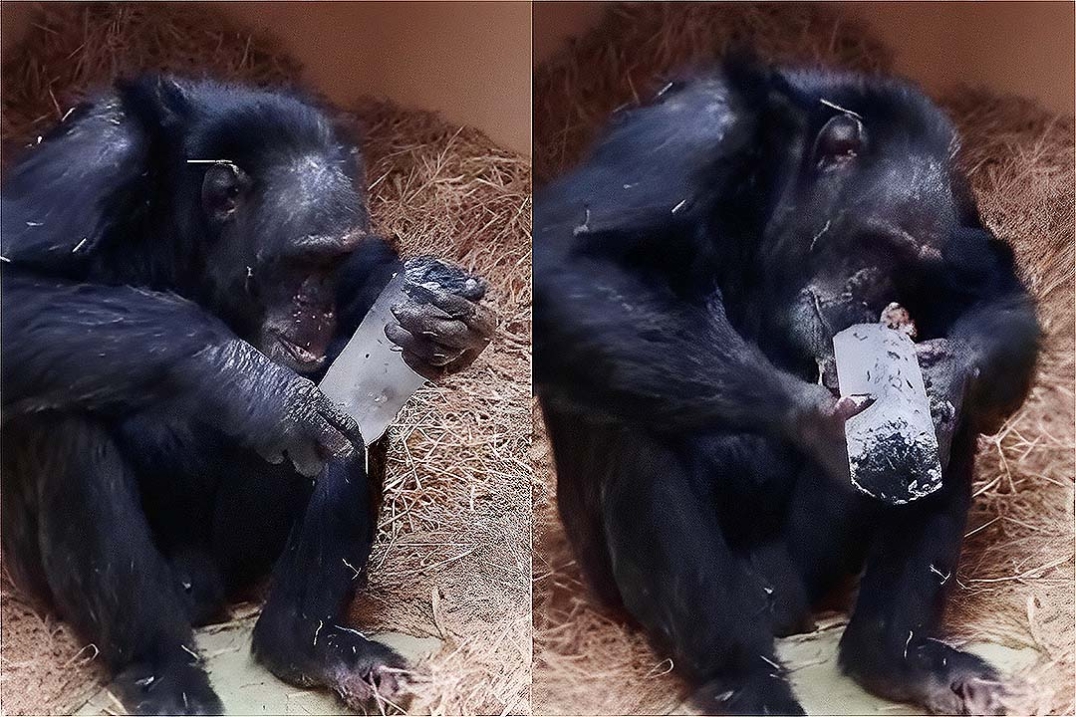
Obviously, we have not done the experiments with hominids. We performed the experiments to explain the allure of hominins by crystals with the help of a group of chimpanzees, the closest apes from which we parted about six million years ago and with whom we share large genetic and behavioral similarities. In this work, we describe the foundations and the conduct of these experiments, the experimental results, and an analysis of their meaning and important implications.
 García-Ruiz’ Lab at DIPC