A 22-year-old student, American Stanley Miller, proposed one of the simplest yet most ambitious experiments in history to his advisor in 1952: to recreate the conditions of early Earth in a glass container and see if something resembling life could emerge from nothing in his lab at the University of Chicago. They injected ammonia, methane, hydrogen, and water vapor to simulate the atmosphere, applied electric sparks to mimic lightning, and — Eureka! — amino acids soon appeared, the building blocks of living beings.
In 2021, the team led by Spanish geologist Juan Manuel Garcia-Ruiz repeated the experiment using a Teflon container and stunned the world: nothing appeared. “The key was the silica in the glass!” exclaims the researcher, who has just received €10 million in EU funding to study the role of silica — a mineral made of silicon and oxygen — in the origin of life on Earth.
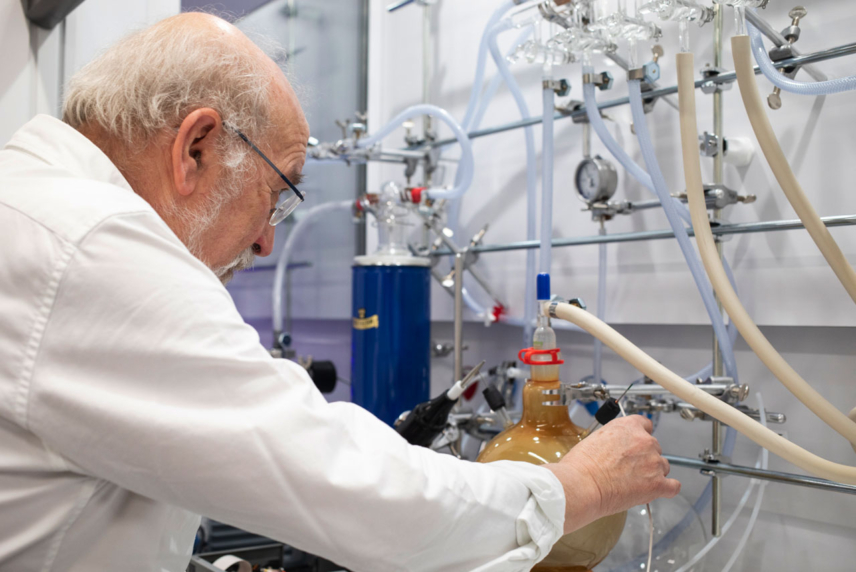
 García-Ruiz’ Lab at DIPC